
Introduction
Emerging infectious diseases (EIDs) are infections that have recently appeared in a population or are rapidly increasing in incidence, geographic distribution, or severity. These diseases may arise from the evolution of existing microorganisms, the spread of known pathogens into new regions, or the reappearance of previously controlled infections due to antimicrobial resistance or weakened public health systems.
EIDs represent a significant global health challenge, accounting for approximately 15% of all human pathogens. Their unpredictable nature and potential for rapid international spread make them a major concern for public health authorities worldwide. Unlike many chronic diseases, infectious diseases can spread quickly across populations, sometimes leading to epidemics or pandemics.
Characteristics of Emerging Infectious Diseases
Emerging infectious diseases share several defining features:
- Unpredictability and potential for rapid outbreaks
- High transmissibility, often through human-to-human contact
- Global spread, facilitated by travel and trade
- Potential for immunity or prevention, particularly through vaccination
- Strong links to environmental and human behavioral factors
Many EIDs are zoonotic, meaning they originate in animals and are transmitted to humans. These diseases can also be foodborne, vector-borne, or airborne, depending on the mode of transmission.
For an emerging pathogen to establish itself in humans, it must:
- Enter a susceptible population
- Adapt to human hosts
- Spread efficiently between individuals
Zoonotic Diseases and Their Global Importance
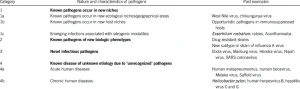
Zoonotic diseases are infections transmitted from animals to humans through direct contact, contaminated food or water, or environmental exposure. They account for approximately 60% of all infectious diseases affecting humans.
Pathogens originating in animals evolve through several stages before becoming fully adapted to humans. These stages range from exclusive transmission among animals to efficient human-to-human transmission.
Examples of zoonotic diseases include:
- Lyme disease (tick-borne)
- Salmonella infections (foodborne)
- Influenza viruses originating in birds or pigs
The increasing interaction between humans and animals—through agriculture, urbanization, and environmental changes—has significantly increased the risk of zoonotic disease transmission.
The One Health Approach
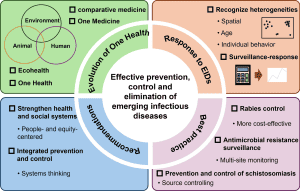
The One Health approach is a multidisciplinary strategy that recognizes the interconnectedness of human, animal, and environmental health. It promotes collaboration among healthcare providers, veterinarians, ecologists, and public health professionals to prevent and control disease outbreaks.
Organizations such as the Centers for Disease Control and Prevention implement One Health strategies to monitor disease transmission and develop prevention programs. This approach is particularly important for controlling zoonotic and vector-borne diseases.
Vector-Borne Emerging Infectious Diseases
Vector-borne diseases are transmitted by organisms such as mosquitoes, ticks, and fleas. These vectors carry pathogens between hosts, making them a major source of emerging infections worldwide.
Common vector-borne diseases include:
- Lyme disease
- Dengue fever
- Zika virus infection
- West Nile virus
- Chikungunya
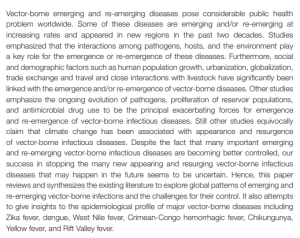
These diseases are increasing globally due to factors such as climate change, urbanization, and global travel. Warmer temperatures allow vectors like mosquitoes to expand into new geographic regions, increasing disease transmission risk.
Factors Driving the Emergence of Infectious Diseases
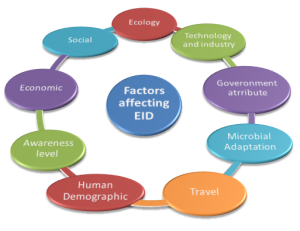
The emergence and spread of infectious diseases are influenced by a combination of biological, environmental, and social factors:
1. Microbial Evolution
Pathogens constantly evolve through genetic mutations, such as antigenic drift and shift in influenza viruses, allowing them to evade immune responses.
2. Population Growth and Urbanization
High population density facilitates rapid disease transmission, particularly in urban areas with inadequate sanitation.
3. Global Travel and Trade
International travel enables pathogens to spread quickly across continents, as seen in pandemics.
4. Environmental Changes
Deforestation, climate change, and agricultural expansion disrupt ecosystems and increase human exposure to new pathogens.
5. Antimicrobial Resistance
The overuse and misuse of antibiotics have led to resistant strains of bacteria, contributing to the reemergence of previously controlled diseases.
6. Weak Public Health Systems
Breakdowns in vaccination programs, surveillance, and healthcare infrastructure can lead to disease outbreaks.
Examples of Major Emerging Infectious Diseases
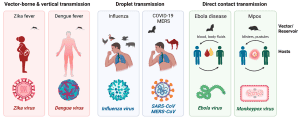
Several well-known diseases illustrate the impact of emerging infections:
- HIV/AIDS: Originated from animal-to-human transmission and spread globally through human behavior and travel
- H1N1 Influenza: A swine-origin virus that caused a global pandemic
- Ebola Virus Disease: A zoonotic disease with high mortality rates
- Zika Virus Infection: Spread rapidly across continents due to vector expansion
These examples highlight how human activity, environmental changes, and microbial evolution contribute to disease emergence.
Advances in Measuring and Monitoring Emerging Diseases
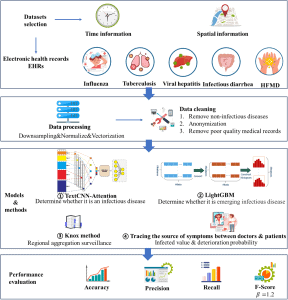
Modern surveillance systems and diagnostic technologies play a crucial role in detecting and managing EIDs. Institutions like the National Institute of Allergy and Infectious Diseases classify emerging pathogens based on their risk to public health and prioritize research efforts.
New pathogens continue to be identified, including antibiotic-resistant bacteria and novel viruses, emphasizing the need for continuous monitoring and innovation.
Emerging Pathogens of Concern
Recent years have seen the emergence of several concerning pathogens:
Candida auris
A multidrug-resistant fungal pathogen associated with healthcare-associated infections and high mortality rates.
Elizabethkingia anopheles
A gram-negative bacterium linked to hospital outbreaks, particularly in immunocompromised individuals.
Lone Star Tick (Amblyomma americanum)
A vector responsible for transmitting diseases such as ehrlichiosis and Heartland virus.
Zoonotic Influenza Viruses
New strains of influenza, including avian and swine flu, pose a pandemic risk due to their ability to mutate and infect humans.
Zoonotic Influenza and Pandemic Risk
Influenza viruses are classified into types A, B, C, and D, with type A posing the greatest pandemic threat due to its ability to infect both humans and animals.
Notable zoonotic influenza strains include:
- H5N1 (avian flu)
- H7N9 (avian flu)
- H1N1 (swine flu)
Transmission typically occurs through direct contact with infected animals or contaminated environments. If these viruses acquire the ability for sustained human-to-human transmission, they can trigger global pandemics.
Clinical Features, Diagnosis, and Management
Emerging infectious diseases can present with a wide range of clinical symptoms, from mild infections to severe, life-threatening conditions.
Common Symptoms
- Fever
- Respiratory distress
- Fatigue
- Gastrointestinal symptoms
Diagnosis
- Molecular techniques such as PCR
- Blood cultures
- Serological testing
Treatment
- Antiviral or antibiotic therapy (depending on the pathogen)
- Supportive care
- Infection control measures
Early diagnosis is critical to prevent disease spread and improve patient outcomes.
Prevention and Control Strategies
Effective prevention of emerging infectious diseases requires a combination of public health measures and individual actions:
- Vaccination programs
- Vector control (e.g., mosquito management)
- Food safety practices
- Personal hygiene (handwashing, protective equipment)
- Surveillance and reporting systems
Travelers should follow safety guidelines, especially when visiting regions with known outbreaks.
Role of Healthcare Professionals in Managing EIDs
Healthcare providers play a vital role in identifying and controlling emerging infectious diseases. Nurses and clinicians are often the first to recognize unusual disease patterns and initiate appropriate interventions.
Key responsibilities include:
- Taking detailed patient histories, including travel exposure
- Implementing infection prevention measures
- Educating patients and communities
- Collaborating with public health authorities
Staying updated with global health information from organizations such as the World Health Organization is essential for effective disease management.
Conclusion
Emerging infectious diseases represent a continuous and evolving threat to global health. Driven by factors such as microbial evolution, environmental changes, and human behavior, these diseases can spread rapidly and have significant societal and economic impacts.
Advances in surveillance, diagnostics, and global collaboration—especially through strategies like the One Health approach—are critical for early detection and effective response. Understanding the mechanisms behind disease emergence and implementing proactive prevention strategies are essential steps toward reducing the impact of future outbreaks