
Introduction to HLA and the Major Histocompatibility Complex
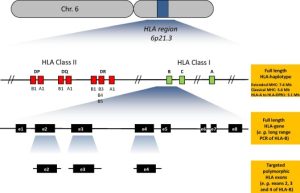
Human Leukocyte Antigen (HLA) genes are located within the highly dense genomic region known as the Major Histocompatibility Complex (MHC), specifically on the short arm of chromosome 6 (6p21.3). This region contains a large number of genes essential for immune system function. Among them, HLA genes play a central role in regulating adaptive immune responses by encoding proteins responsible for antigen presentation to T lymphocytes.
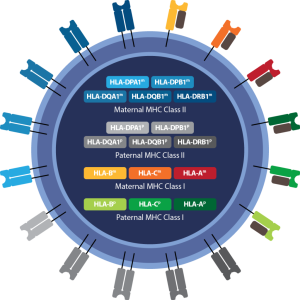
The MHC is structurally divided into three regions: class I, class II, and class III. The classical HLA genes are located within the class I and class II regions. Class I genes include HLA-A, HLA-B, and HLA-C, while class II genes include HLA-DRB1, HLA-DQB1, and HLA-DPB1. These genes are among the most polymorphic in the human genome, with thousands of allelic variants identified, reflecting their evolutionary importance in host defense.
Functional Role and Genetic Diversity of HLA Molecules
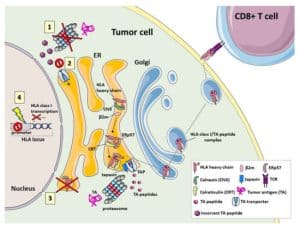
HLA proteins function as antigen-presenting molecules, binding peptide fragments derived from pathogens or self-proteins and displaying them on the cell surface for recognition by T-cells. This interaction is a fundamental step in initiating immune responses. The high degree of polymorphism in HLA genes is primarily concentrated in the exons encoding the peptide-binding groove, which directly interacts with antigens and T-cell receptors.
This genetic diversity is driven by evolutionary pressures such as pathogen exposure and overdominant selection, where heterozygous individuals have a survival advantage due to their ability to present a broader range of antigenic peptides. This heterozygote advantage enhances immune responsiveness and reduces susceptibility to infectious diseases.
Challenges in Conventional HLA Typing
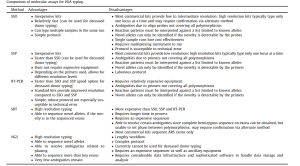
Traditional HLA typing methods focus on identifying polymorphisms within limited genomic regions, particularly exons 2 and 3 of class I genes. While these regions are functionally critical, this approach introduces several limitations. One of the major challenges is the inability to determine the phase of polymorphisms meaning whether specific mutations are located on the same chromosome (cis) or different chromosomes (trans).
This limitation leads to ambiguous typing results, often reported as multiple possible allele combinations. Additionally, achieving high-resolution, allele-level typing requires multiple complementary techniques, including serological assays and molecular methods, which are time-consuming, labor-intensive, and costly. These constraints limit the scalability of precise HLA typing in routine clinical laboratories.
Emergence of Next-Generation Sequencing in HLA Typing
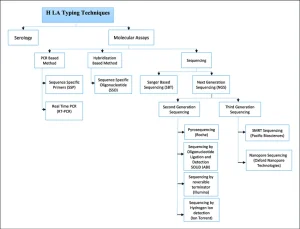
The development of next-generation sequencing (NGS) technologies has revolutionized HLA typing by enabling high-throughput and high-resolution genetic analysis. Among these, second-generation sequencing methods introduced the possibility of sequencing DNA fragments in parallel, improving efficiency and throughput.
Sequence-Based Typing (SBT) protocols became widely adopted, allowing direct sequencing of HLA genes. However, these methods still rely on short read lengths, requiring reconstruction of full gene sequences from overlapping fragments. This introduces potential errors in alignment and phasing, especially in highly polymorphic regions like HLA genes.
Short-read sequencing also struggles to detect novel alleles or recombination events accurately, as bioinformatics pipelines may bias toward known reference sequences. These limitations highlight the need for more advanced technologies capable of resolving full-length gene sequences in a single read.
SMRT Sequencing: A Breakthrough in HLA Typing
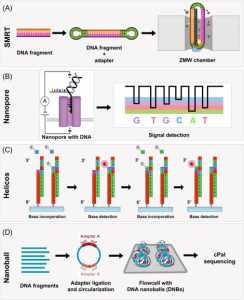
A major advancement in HLA typing has been the introduction of Single Molecule Real-Time sequencing (SMRT) by Pacific Biosciences. This third-generation sequencing technology enables the generation of extremely long read lengths, often exceeding 20 kilobases, allowing complete sequencing of entire HLA genes in a single continuous read.
SMRT sequencing uses specialized circular DNA templates known as SMRTbell constructs, created by ligating hairpin adapters to linear PCR amplicons. This circularization allows the DNA polymerase to continuously sequence both strands of the DNA molecule, producing a Continuous Long Read (CLR). These reads contain multiple passes over the same sequence, improving accuracy through consensus analysis.
This approach solves the phasing problem by preserving the original linkage of polymorphisms across the entire gene. It also enables direct detection of novel alleles and structural variations without relying heavily on reference-based reconstruction.
Study Design and Methodology
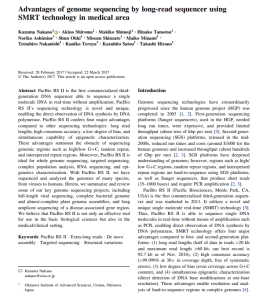
A feasibility study was conducted to evaluate the application of SMRT sequencing for HLA typing in a clinical laboratory setting. Seven DNA samples were selected, including both blood-derived and saliva-derived DNA, reflecting real-world sample diversity. Additionally, three well-characterized B-lymphoblastoid cell lines were included as controls.
Full-length HLA class I genes were amplified using PCR, generating amplicons approximately 3.4–3.5 kb in size. These amplicons were pooled, converted into SMRTbell templates, and sequenced using the PacBio RS II platform. Data processing involved generating consensus sequences from multiple subreads and comparing them to reference sequences in the IMGT/HLA Database.
Validation of results was performed using Sanger sequencing, particularly for regions showing discrepancies or novel variations.
Results and Findings
The study demonstrated that SMRT sequencing could successfully generate high-quality, full-length HLA class I gene sequences. All expected alleles were accurately identified, including homozygous and heterozygous genotypes. The sequencing depth was substantial, with coverage exceeding 150x for all alleles, ensuring high confidence in consensus sequences.
Importantly, the technology was able to detect novel alleles and correct previously reported sequencing errors in reference databases. Several new genomic variants were identified and subsequently validated, highlighting the ability of SMRT sequencing to expand current knowledge of HLA diversity.
Another critical finding was the accurate sequencing of homopolymer regions, which are typically problematic for many sequencing platforms. SMRT technology demonstrated high accuracy even in regions with repetitive nucleotide sequences.
Advantages Over Traditional Methods
SMRT sequencing offers several key advantages for HLA typing:
- Full-length gene sequencing: Eliminates the need for fragment assembly and reduces ambiguity
- Accurate phasing: Directly determines the linkage of polymorphisms
- High resolution: Enables allele-level typing in a single experiment
- Detection of novel variants: Improves genetic databases and clinical interpretation
- Reduced workflow complexity: Minimizes the need for multiple testing platforms
These benefits make SMRT sequencing a strong candidate for routine use in histocompatibility laboratories.
Clinical Applications and Impact
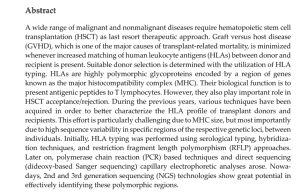
High-resolution HLA typing is critical in several clinical contexts, particularly in organ and hematopoietic stem cell transplantation. Accurate matching between donor and recipient HLA alleles significantly reduces the risk of complications such as graft-versus-host disease and improves overall survival outcomes.
The ability of SMRT sequencing to provide ultra-high-resolution typing can enhance donor selection processes, leading to better transplant compatibility. Additionally, HLA typing is increasingly used in pharmacogenomics to predict drug hypersensitivity and in disease association studies.
Limitations and Future Perspectives
Despite its advantages, SMRT sequencing still faces challenges. Cost per sample and scalability remain important considerations for widespread clinical adoption. While multiplexing capabilities are improving, further optimization is required to process large sample volumes efficiently.
Additionally, current studies have focused primarily on HLA class I genes. Future research must validate the performance of SMRT sequencing for class II genes, which are longer and more complex.
Regulatory standards for clinical implementation are still evolving, particularly regarding minimum sequencing depth and quality thresholds. Large-scale validation studies across diverse populations will be essential to establish robust guidelines.
Conclusion
Next-generation sequencing technologies, particularly SMRT sequencing, represent a transformative advancement in HLA typing. By enabling full-length, high-resolution, and accurate allele identification, this technology addresses many limitations of traditional methods.
Its application in clinical immunogenetics has the potential to significantly improve transplantation outcomes, enhance disease research, and support personalized medicine. As technological and regulatory challenges are addressed, SMRT sequencing is poised to become a standard tool in modern histocompatibility laboratories.