
Introduction
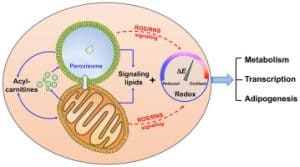
Peroxisomes are essential organelles present in almost all eukaryotic cells, playing a critical role in cellular metabolism. Unlike mitochondria, peroxisomes do not contain their own DNA and rely entirely on nuclear-encoded proteins for their formation and function. Both peroxisomes and mitochondria are closely linked to the endoplasmic reticulum (ER), which contributes to their membrane biogenesis and lipid supply.
Functionally, peroxisomes and mitochondria share important roles in lipid metabolism. While mitochondria are primarily responsible for ATP production through oxidative phosphorylation, peroxisomes contribute by metabolizing very long-chain fatty acids and regulating reactive oxygen species (ROS).
Role of Peroxisomes in Lipid Metabolism and Cellular Homeostasis
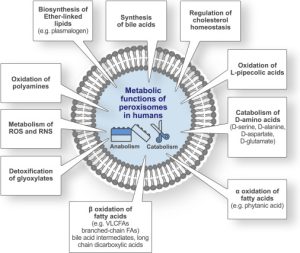
Traditionally, peroxisomes were considered “housekeeping” organelles due to their role in detoxifying ROS generated during mitochondrial activity. However, current research highlights their broader metabolic importance:
- β-oxidation of very long-chain fatty acids, producing shorter-chain substrates for mitochondrial energy production
- Metabolic compensation in conditions of mitochondrial dysfunction (obesity, metabolic disorders, carnitine deficiency)
- Participation in ω-oxidation via the ER, generating dicarboxylic acids for further metabolism
Although peroxisomal β-oxidation does not directly produce ATP, it provides essential metabolic intermediates that support mitochondrial energy pathways.
Limitations of Traditional Methods for Measuring Peroxisomal Activity
Conventional approaches to assess peroxisomal β-oxidation include:
- Mass spectrometry analysis of peroxisome-specific lipid species
- Measurement of NAD⁺ levels, a cofactor involved in fatty acid metabolism
However, these methods present significant limitations:
- NAD⁺ is a transient metabolic cofactor and lacks specificity unless peroxisomes are purified
- Mass spectrometry requires specialized equipment and expertise
These challenges highlight the need for more accurate and accessible techniques to evaluate peroxisomal metabolic function.
Development of a Seahorse-Based Assay for Peroxisomal Oxidative Capacity
To overcome these limitations, a novel methodology was developed to measure peroxisomal oxygen consumption rate (OCR) in real time using the Seahorse assay, a widely recognized platform for studying mitochondrial respiration.
Importantly, peroxisomes can contribute up to 20% of total cellular oxygen consumption in certain cell types, such as hepatocytes, making them suitable for Seahorse-based analysis.
This approach enables:
- Direct measurement of peroxisomal oxidative activity
- Real-time monitoring of metabolic responses
- Improved assessment of cellular metabolic health
Isolation and Purification of Functional Peroxisomes
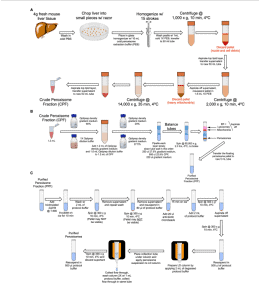
Accurate measurement of peroxisomal activity requires highly purified organelle fractions. The methodology involves:
- Tissue Homogenization
- Liver tissue is processed under cold conditions to preserve organelle integrity
- Differential and Density Gradient Centrifugation
- Used to obtain crude and purified peroxisomal fractions
- Removal of Mitochondrial Contamination
- Magnetic-activated cell sorting (MACS) is applied using antibodies targeting mitochondrial proteins (CPT1B)
- This step ensures high purity by selectively removing mitochondria
- Validation of Purity
- Immunoblotting is performed using organelle-specific markers ( catalase for peroxisomes, cytochrome c for mitochondria)
This optimized protocol ensures functional and contamination-free peroxisomes suitable for metabolic assays.
Seahorse Assay Conditions for Peroxisomal Metabolism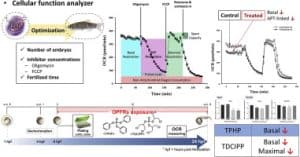
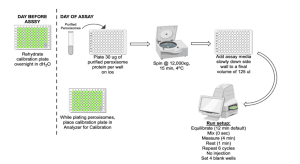
To adapt the Seahorse system for peroxisomes, specific assay conditions were established:
- Supplementation with ATP, since peroxisomes cannot synthesize ATP
- Addition of fatty acids (palmitic, oleic, linoleic acids) as metabolic substrates
- Inclusion of acetyl-CoA to mimic physiological metabolic conditions
- Use of enoximone, an inhibitor of peroxisomal β-oxidation, as a control
These conditions allow precise measurement of oxygen consumption linked specifically to peroxisomal activity.
Measurement of Oxidative Activity and Hydrogen Peroxide Production
Peroxisomal oxidative metabolism was assessed through:
1. Oxygen Consumption Rate (OCR)
- Fatty acids increased peroxisomal OCR by approximately 2.5-fold
- Addition of acetyl-CoA further enhanced OCR
- Enoximone significantly reduced OCR, confirming assay specificity
2. Hydrogen Peroxide (H₂O₂) Production
- Peroxisomes consume oxygen primarily to produce H₂O₂ during β-oxidation
- Increased fatty acid metabolism correlates with higher H₂O₂ levels
- Enoximone reduces H₂O₂ production in a dose-dependent manner
These results validate OCR and H₂O₂ as reliable indicators of peroxisomal oxidative capacity.
Significance and Applications of the Method
This Seahorse-based methodology provides a robust, reproducible, and accessible approach to study peroxisomal metabolism. Key advantages include:
- Real-time measurement of oxidative activity
- High sensitivity and reproducibility
- Reduced reliance on complex analytical techniques
Implications for Metabolic Research and Disease
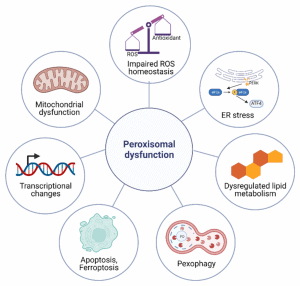
Peroxisomes play a crucial role in metabolic health, and their dysfunction is associated with disorders such as:
- Zellweger syndrome
- Lipid metabolism disorders
- Neurological diseases linked to peroxisomal defects
This method enables deeper investigation into:
- Organelle-specific metabolism
- Interaction between peroxisomes and mitochondria
- Mechanisms underlying metabolic diseases
Conclusion
The development of a Seahorse-based assay for isolated peroxisomes represents a significant advancement in metabolic research. By enabling accurate, real-time measurement of peroxisomal oxidative capacity, this approach opens new opportunities for understanding cellular metabolism, organelle interactions, and disease mechanisms.