

Introduction to Mycobacteria
Mycobacteria are a diverse group of aerobic, nonmotile bacteria widely distributed in nature. They inhabit various environments, ranging from soil and water ecosystems to host-associated niches in humans and animals. Members of this group include harmless environmental saprophytes as well as clinically significant pathogens.
The classification and identification of mycobacteria have historically relied on phenotypic characteristics such as growth patterns, colony morphology, and biochemical behavior. However, advances in molecular biology have significantly improved the accuracy of bacterial taxonomy, allowing for the identification of new species based on genetic and phylogenetic analysis.
One such example is Mycobacterium mageritense, a novel species identified through a combination of classical microbiological methods and modern molecular techniques.
Evolution of Mycobacterial Taxonomy
Traditional methods for identifying mycobacterial species include:
- Biochemical testing (enzyme activity, metabolic properties)
- Culture characteristics (growth rate, pigmentation)
- Fatty acid and mycolic acid analysis
While useful, these approaches often lack the resolution needed to distinguish closely related species. As a result, molecular techniques have become essential in modern taxonomy.
Key molecular tools include:
- DNA-DNA hybridization
- High-performance liquid chromatography (HPLC)
- Multilocus enzyme electrophoresis
- Gene sequencing and phylogenetic analysis
The 16S rRNA gene has been widely used for bacterial identification due to its conserved nature. However, it may not differentiate closely related species. Therefore, additional genetic markers such as hsp65 (heat shock protein gene) and sodA (superoxide dismutase gene) are often used to improve resolution.
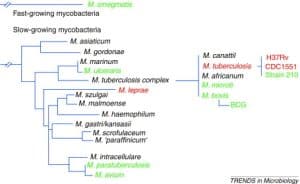
Discovery of Mycobacterium mageritense
Mycobacterium mageritense was identified during the investigation of mycobacterial strains isolated from human respiratory specimens that could not be classified using conventional methods.
These strains were obtained from sputum samples of multiple patients in Spain. Although colonization of the respiratory tract was observed, not all cases were associated with active disease, suggesting that this organism may act as an opportunistic pathogen or colonizer.
The identification of this new species was based on comprehensive taxonomic analysis, including phenotypic, biochemical, and molecular characterization.
Materials and Methods for Identification
Isolation of Bacterial Strains
Five clinical strains of M. mageritense were analyzed. These strains were isolated from sputum samples collected from different patients and cultured under controlled laboratory conditions.
Standard microbiological procedures were used to isolate mycobacteria, followed by growth on specialized media such as Lowenstein-Jensen agar.
Phenotypic and Biochemical Characterization
The strains were evaluated based on several characteristics:
- Growth at different temperatures (22°C to 45°C)
- Colony morphology and pigmentation
- Enzymatic activities (catalase, urease, arylsulfatase)
- Resistance to antimicrobial agents
The bacteria formed smooth, nonpigmented colonies within a few days, indicating rapid growth. Microscopically, the cells appeared as acid-fast rods, a defining feature of mycobacteria.
Biochemical tests revealed variability among strains, particularly in enzyme activity and substrate utilization, highlighting the complexity of identifying this organism using traditional methods alone.
Mycolic Acid Analysis
Mycolic acids are long-chain fatty acids found in the cell walls of mycobacteria and are essential for their structural integrity and pathogenicity.
Analysis using thin-layer chromatography demonstrated that M. mageritense produces:
- Alpha-mycolates
- Alpha-prime mycolates
- Epoxymycolates
These lipid profiles are species-specific and contribute to differentiation from other rapidly growing mycobacteria.

Molecular Identification Techniques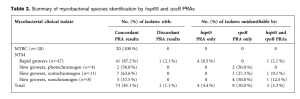
PCR-RFLP Analysis of hsp65 Gene
Polymerase chain reaction-restriction fragment length polymorphism (PCR-RFLP) analysis of the hsp65 gene is widely used for differentiating mycobacterial species.
In M. mageritense, digestion with restriction enzymes produced a unique fragment pattern, allowing clear distinction from closely related species such as M. smegmatis.
16S rRNA Gene Sequencing
Sequencing of the 16S rRNA gene confirmed that M. mageritense belongs to the group of rapidly growing mycobacteria. However, its sequence showed significant differences from previously described species.
Key findings include:
- Unique nucleotide variations in hypervariable regions
- Distinct structural features indicating phylogenetic divergence
These differences support its classification as a novel species.
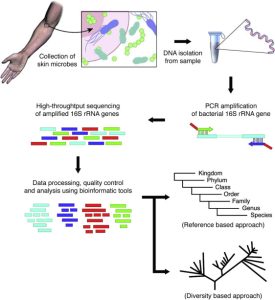
sodA Gene Sequencing
The sodA gene, encoding superoxide dismutase, provides higher resolution for distinguishing closely related species.
In M. mageritense, sodA sequences differed significantly (more than 11%) from other mycobacterial species, reinforcing its genetic uniqueness.
DNA-DNA Hybridization
DNA-DNA hybridization remains a gold standard for bacterial species delineation.
Results showed:
- Greater than 70% similarity among M. mageritense strains (indicating species consistency)
- Less than 28% similarity with most other species (confirming distinct identity)
Some genetic relatedness was observed with M. fortuitum and M. peregrinum, but not enough to classify them within the same species.
Phylogenetic Analysis
Phylogenetic trees based on 16S rRNA and sodA sequences revealed that:
- M. mageritense belongs to the Mycobacteriaceae family
- It occupies an intermediate position between the M. fortuitum complex and thermotolerant rapid growers such as M. smegmatis
This unique phylogenetic placement further supports its classification as a distinct species.
Biological and Growth Characteristics
Morphology and Growth Conditions
- Acid-fast, rod-shaped bacteria
- Nonmotile and non-spore-forming
- Rapid growth within 2–5 days
- Growth observed between 22°C and 45°C (optimal at 30–37°C)
Colonies are smooth, mucoid, and nonphotochromogenic, meaning they do not produce pigment in response to light.
Biochemical Properties
Biochemical features include:
- Positive for arylsulfatase, nicotinamidase, and pyrazinamidase
- Negative for Tween 80 hydrolysis
- Variable nitrate reductase and urease activity
- Ability to utilize mannitol and sometimes inositol as carbon sources
Importantly, M. mageritense lacks thermostable catalase but exhibits heat-labile catalase activity, which helps differentiate it from other species.
Antibiotic Resistance Profile
The species demonstrates resistance to several antimicrobial agents, including:
- Isoniazid
- Cycloserine
- Capreomycin
- Pyrazinamide
- Thiosemicarbazone
It shows variable susceptibility to ethambutol, indicating potential challenges in treatment if clinical infection occurs.
Differentiation from Related Species
Accurate identification of M. mageritense is essential due to its similarity to other rapidly growing mycobacteria.
Key distinguishing features include:
- Growth at 45°C (unlike some related species)
- Ability to utilize mannitol
- Growth on MacConkey agar without crystal violet
- Unique molecular signatures (hsp65, 16S rRNA, sodA genes)
Compared to:
- M. fortuitum: differs in growth conditions and metabolic traits
- M. smegmatis: differs in culture characteristics and molecular patterns
Clinical Relevance and Implications
Although M. mageritense has been isolated from human respiratory samples, its role as a pathogen is not fully established. In some cases, it may represent colonization rather than active infection.
However, its presence in clinical specimens highlights the importance of accurate identification, particularly in immunocompromised patients or those with underlying respiratory conditions.
Emerging non-tuberculous mycobacteria like M. mageritense are increasingly recognized in clinical microbiology, emphasizing the need for advanced diagnostic tools.
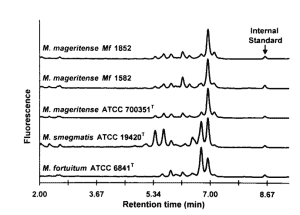
Importance of Molecular Diagnostics in Modern Microbiology
The identification of M. mageritense demonstrates the limitations of traditional microbiological methods and the importance of molecular techniques.
Modern diagnostic approaches enable:
- Precise species identification
- Detection of novel organisms
- Improved understanding of bacterial evolution and diversity
These tools are essential for advancing research, improving patient care, and monitoring emerging pathogens.
Conclusion
Mycobacterium mageritense represents a distinct species within the rapidly growing mycobacteria, identified through a combination of phenotypic, biochemical, and molecular analyses.
Its unique genetic profile, growth characteristics, and biochemical properties distinguish it from closely related species. Although its clinical significance remains under investigation, its identification underscores the importance of advanced diagnostic methods in detecting emerging bacterial species.
As microbiology continues to evolve, the integration of molecular and traditional techniques will remain essential for understanding microbial diversity and addressing emerging infectious threats.