

Neurodegeneration is a widely used term in neuroscience and medicine, yet its precise definition remains surprisingly complex. Although often mentioned in scientific literature, it is rarely explored in depth in standard medical references. Understanding neurodegeneration is essential, as it underlies a large group of chronic and disabling neurological disorders that are becoming increasingly prevalent worldwide.
What Is Neurodegeneration?
Etymologically, the term “neurodegeneration” combines “neuro” (referring to neurons or nerve cells) and “degeneration”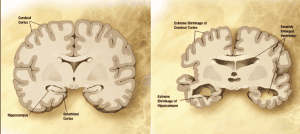 (indicating the progressive loss of structure or function). In its strict sense, neurodegeneration refers to any pathological process primarily affecting neurons, leading to their dysfunction and eventual death.
In clinical practice, neurodegenerative diseases represent a heterogeneous group of disorders characterized by:
- Progressive neuronal loss
- Specific targeting of certain neuron populations
- Gradual worsening over time
- Unknown or multifactorial causes
Importantly, not all neurological conditions are considered neurodegenerative. Disorders such as tumors, trauma, hemorrhage, or infections are excluded because they do not primarily involve intrinsic neuronal degeneration. Similarly, diseases affecting non-neuronal components, such as myelin in multiple sclerosis, are not classified as neurodegenerative.
Major Neurodegenerative Diseases
Although hundreds of neurodegenerative disorders exist, research has primarily focused on a few major conditions, including:
- Alzheimer’s disease (AD)
- Parkinson’s disease (PD)
- Huntington’s disease (HD)
- Amyotrophic lateral sclerosis (ALS)
These diseases are widely studied due to their prevalence and severe impact on cognition, movement, and survival. However, many less common neurodegenerative disorders remain under-researched despite being equally devastating.
Aging: The Primary Risk Factor
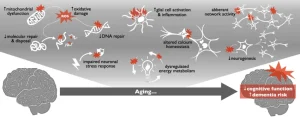
One of the most consistent risk factors for neurodegenerative diseases is aging. As life expectancy increases globally, the proportion of elderly individuals continues to rise. This demographic shift is expected to significantly increase the number of people affected by neurodegenerative conditions in the coming decades.
This trend raises major concerns:
- Increased healthcare costs
- Growing burden on caregivers
- Rising social and economic impact
Despite advances in medicine, current treatments mainly alleviate symptoms rather than halt disease progression. This highlights the urgent need for better understanding and therapeutic innovation.
Classification of Neurodegenerative Diseases
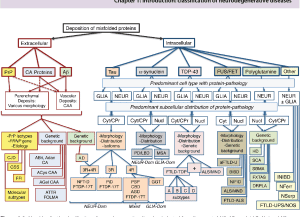
Classifying neurodegenerative diseases is challenging due to overlapping clinical and pathological features. Traditionally, classification is based on:
1. Anatomical Location
Diseases are grouped according to the region of the nervous system affected:
- Cerebral cortex → often associated with dementia
- Basal ganglia → movement disorders
- Cerebellum → coordination and balance issues
- Spinal cord → motor neuron diseases
2. Clinical Presentation
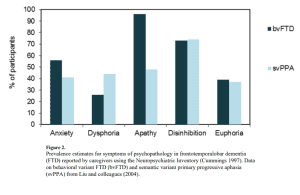
Within each anatomical category, diseases are further classified based on symptoms:
- Dementing vs non-dementing disorders
- Hypokinetic vs hyperkinetic movement disorders
For example:
- Parkinson’s disease is a hypokinetic disorder (reduced movement)
- Huntington’s disease is hyperkinetic (excessive movement)
3. Molecular Classification (Emerging Approach)
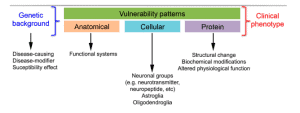
Modern research increasingly favors classification based on molecular mechanisms. This approach groups diseases by shared biological features, such as:
- Protein aggregation disorders
- Trinucleotide repeat diseases
- Prion diseases
- Synucleinopathies and tauopathies
This molecular perspective may improve diagnosis and open new therapeutic strategies by targeting common pathways across diseases.
Causes of Neurodegeneration
The causes of neurodegenerative diseases are complex and often unclear. In most cases, they result from an interplay between genetic and environmental factors.
Genetic Factors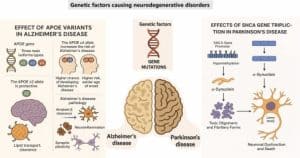
Some neurodegenerative diseases have a clear hereditary component:
- Autosomal dominant (Huntington’s disease)
- Autosomal recessive
- X-linked inheritance
- Mitochondrial inheritance
Even in diseases that are mostly sporadic, such as Alzheimer’s or Parkinson’s, a small percentage of cases are familial. These genetic forms provide valuable insights into disease mechanisms.
Environmental Factors
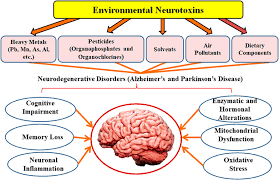
Environmental triggers may also contribute, including:
- Exposure to toxins
- Chemical compounds
- Lifestyle factors
However, strong evidence linking specific environmental causes to most neurodegenerative diseases is limited. This suggests that many cases arise from a combination of genetic susceptibility and environmental exposure.
Mechanisms of Neuronal Death
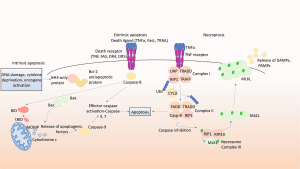
A hallmark of neurodegeneration is the progressive loss of neurons. This process is not uniform and can occur through several distinct mechanisms:
Types of Cell Death
- Apoptosis: programmed and regulated cell death
- Necrosis: uncontrolled cell death due to injury
- Autophagy: self-digestion of cellular components
- Cytoplasmic degeneration: structural breakdown within the cell
Contrary to earlier beliefs, neuronal death is not limited to apoptosis and necrosis. These diverse mechanisms are controlled by different molecular pathways, making them important targets for therapeutic intervention.
Protein Aggregation
Many neurodegenerative diseases are associated with abnormal protein accumulation inside neurons. These aggregates may disrupt cellular function and contribute to neuronal death.
Examples include:
- Amyloid plaques in Alzheimer’s disease
- Lewy bodies in Parkinson’s disease
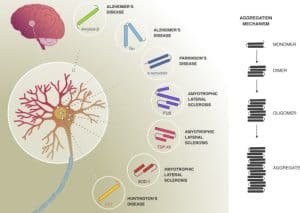
Selective Vulnerability of Neurons
A striking feature of neurodegeneration is that only specific populations of neurons are affected, while others remain intact. This selective vulnerability is still not fully understood but may depend on:
- Neuronal function
- Metabolic activity
- Connectivity within neural networks
In some diseases, degeneration spreads across interconnected brain regions, a process known as transneuronal degeneration.
Disease Onset and Progression
Neurodegenerative diseases develop slowly and often remain undetected for years. Symptoms appear only when a critical number of neurons are lost.
Key characteristics include:
- Delayed onset: disease begins long before symptoms appear
- Gradual progression: slow worsening over time
- Threshold effect: symptoms emerge once neuronal loss exceeds a functional limit
Interestingly, disease progression may appear sudden at times. This is often due to nonlinear relationships between neuronal loss and clinical symptoms rather than an actual acceleration of degeneration.
Are Neurodegenerative Diseases Fatal?
Not all neurodegenerative diseases directly cause death. Fatality depends on the systems affected:
- Diseases impacting respiratory or cardiac control can be life-threatening (e.g., ALS)
- Others increase vulnerability to complications such as infections, malnutrition, or falls
In many cases, death results from secondary complications rather than the neurodegenerative process itself.
Neurodegeneration and Aging: Are They the Same?
It was long believed that aging naturally leads to neuronal loss and represents a mild form of neurodegeneration. However, recent research challenges this view.
Advanced techniques show that:
- Normal aging does not necessarily involve significant neuron loss
- Structural brain changes in aging differ from those in neurodegenerative diseases
- Protein aggregates may appear in healthy elderly individuals without causing disease
This suggests that aging and neurodegeneration are distinct processes, although aging increases susceptibility.
Advances in Research and Future Directions
Recent scientific breakthroughs have significantly improved our understanding of neurodegeneration. Key areas of research include:
Molecular Mechanisms
- Oxidative stress
- Mitochondrial dysfunction
- Protein misfolding and aggregation
- Inflammation
Genetic and Cellular Technologies
- Gene expression analysis
- PCR and molecular diagnostics
- Advanced imaging techniques
- Targeted therapies
These advances are paving the way for:
- Early diagnosis through biomarkers
- Development of neuroprotective therapies
- Personalized medicine approaches
Toward Better Classification and Treatment
Traditional classification based on symptoms and pathology is increasingly being complemented by molecular approaches. This shift allows researchers to:
- Identify shared mechanisms across diseases
- Develop treatments targeting common pathways
- Improve diagnostic accuracy
Ultimately, redefining neurodegenerative diseases at the molecular level may lead to more effective and broadly applicable therapies.
Conclusion
Neurodegeneration represents one of the most complex challenges in modern medicine. It encompasses a diverse group of disorders characterized by progressive neuronal loss, selective vulnerability, and multifactorial causes.
Despite significant advances, many questions remain unanswered, particularly regarding disease initiation and progression. However, ongoing research into molecular mechanisms, genetics, and cellular processes offers hope for the development of effective treatments.
As the global population continues to age, understanding neurodegeneration is more critical than ever. Bridging the gap between basic science and clinical application will be essential to reduce the burden of these devastating diseases and improve patient outcomes.